Esteem believes that its employees have a calling.
Esteem honors everyone’s work.
Esteem restores the human connection between its guests and visitors.
Esteem combines respect with exceptional expertise.
Esteem is a philosophy we now share together.
01
/
09
/
2026
A Cultural Weekend in Marseille: 7 Museums and Landmarks to Explore
In Marseille, culture rarely stays confined to the walls of museums. It extends to the waterfront, the fortifications, the winding streets of Le Panier, and even to the islands in the harbor.
For a first cultural weekend, certain sites offer a particularly good way to understand the city, its history as a port, and its connection to the Mediterranean. Along the waterfront, the Mucem, Fort Saint-Jean, and the Cathedral of La Major form a natural ensemble. The Vieille Charité and the History Museum shed light on other chapters of Marseille’s history, while Notre-Dame de la Garde and the Château d’If offer two very different perspectives on the city.
Here are seven museums and monuments to explore as you take your time moving from one to the next.
1. The Mucem: Marseille Facing the Mediterranean
It's hard to imagine a better introduction to Marseille.
Opened in June 2013, the Museum of European and Mediterranean Civilizations explores Mediterranean societies through history, anthropology, the arts, and the major movements that have shaped both sides of the Mediterranean.
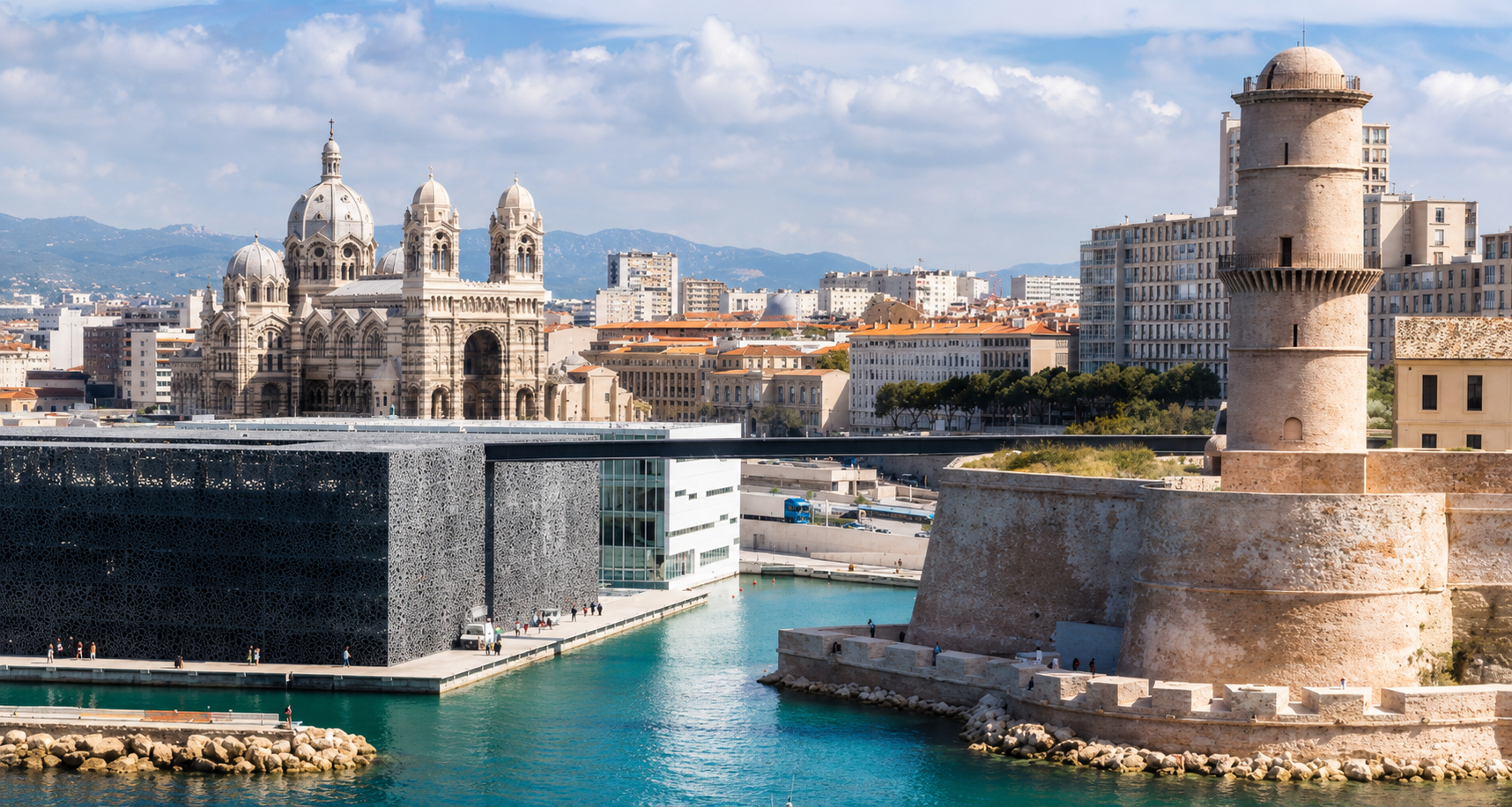
But the Mucem is worth visiting as much for its architecture as for its collections. Situated on the former J4 pier, the building—designed by Rudy Ricciotti in collaboration with Roland Carta—is enveloped in a concrete mesh that has become one of Marseille’s architectural hallmarks.
Inside, the exhibits are in constant dialogue with the outdoors. Walkways run along the facades, light filters through the mesh, and the views open up to the sea before leading to Fort Saint-Jean via a footbridge suspended over the water.
For your first visit, plan on spending at least two hours exploring an exhibition and enjoying the outdoor areas.
Practical information: The Mucem is located at 7 Promenade Robert Laffont. It is closed on Tuesdays, and its hours vary by season. The outdoor areas at J4 and Fort Saint-Jean are free to visit. Check the Mucem’s practical information before your visit.
For more information, our article “The Mucem: Between the City and the Sea” takes a closer look at its architecture, its collections, and its relationship with Fort Saint-Jean.
2. Fort Saint-Jean: From the Museum to the Ramparts
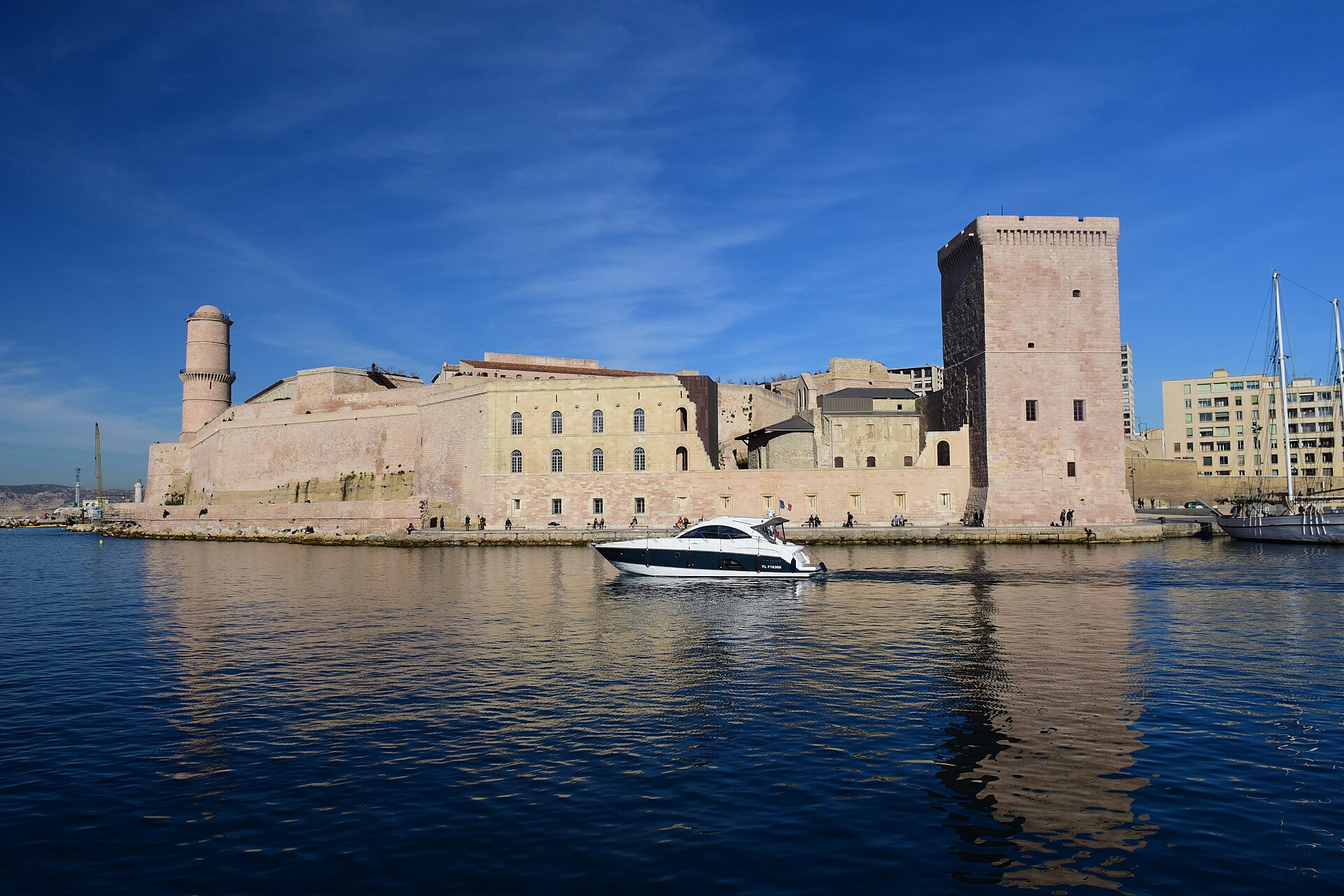
From the roof of the Mucem, a 115-meter walkway leads directly to Fort Saint-Jean.
The change in atmosphere is immediate. Contemporary concrete gives way to the ramparts, towers, and gardens of a military complex with a history spanning several centuries.
Now part of the Mucem, the fort houses exhibition spaces as well as the Jardin des Migrations, featuring species and plants native to the various shores of the Mediterranean. Its terraces also offer stunning views of the entrance to the Old Port, the Palais du Pharo, and the harbor.
A second footbridge leads directly to the Panier neighborhood. Fort Saint-Jean thus becomes less of a standalone attraction and more of a natural link between the waterfront and the old town.
In practice: The fort’s outdoor areas are open to the public during Mucem’s hours of operation. However, some parts of the gardens are less easily accessible. Information is available on the official Fort Saint-Jean website.
3. The Major Cathedral: Marseille on a Monumental Scale
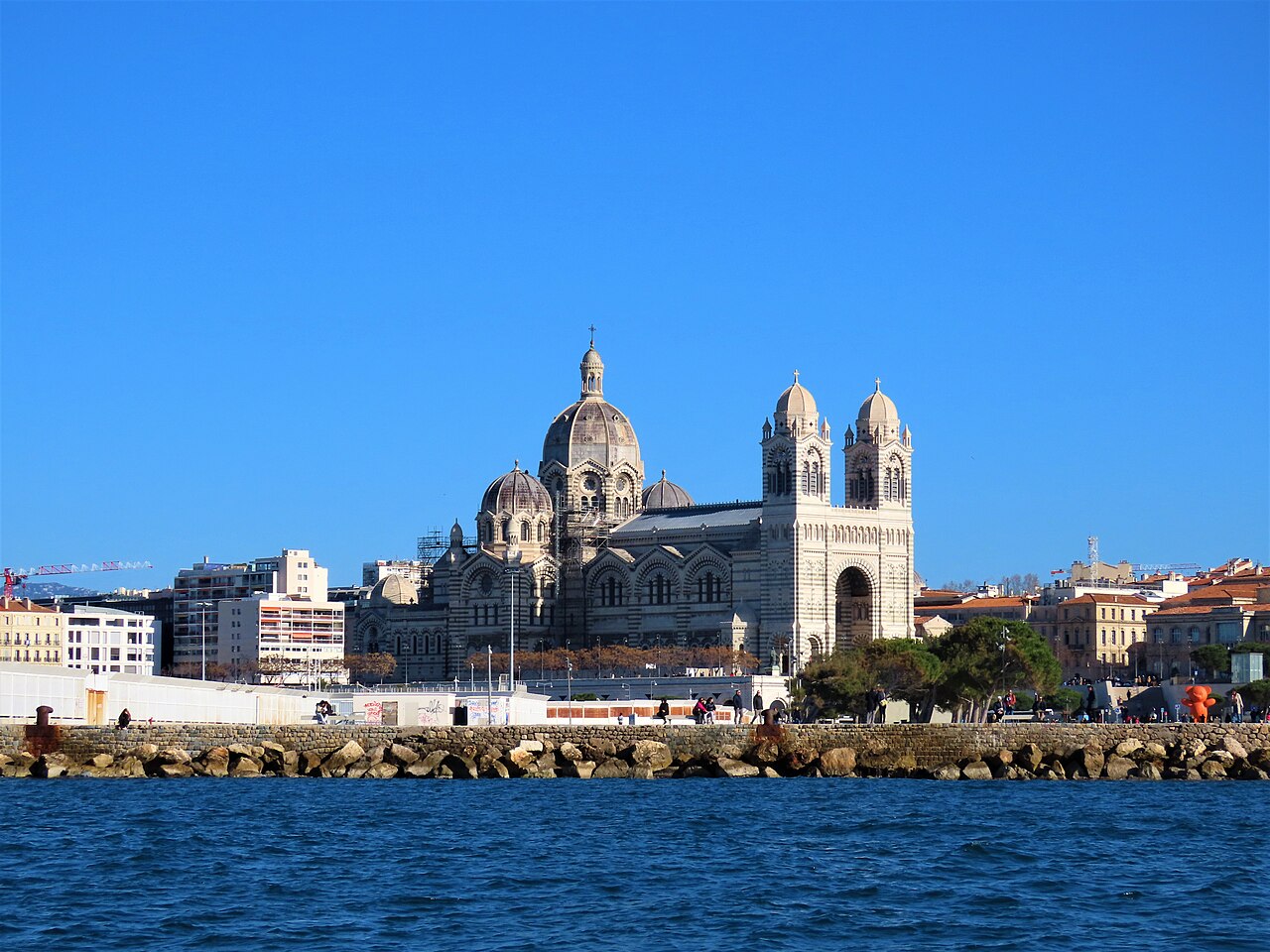
Just a few minutes from the Mucem, the Sainte-Marie-Majeure Cathedral—known simply as “La Major” to the people of Marseille—casts a very different silhouette along the waterfront.
Built between 1852 and 1893, it dates from a period of profound change in Marseille, which was then experiencing rapid commercial and port growth. Its Roman-Byzantine architecture, its domes, and the alternating use of light- and green-colored stone give it an instantly recognizable identity.
Its location is no coincidence. The cathedral was meant to be visible from ships arriving at the new commercial port and to symbolize the power of a Marseille that looked out toward the Mediterranean.
Take the time to go inside. The mosaics, marble, and interior spaces are just as remarkable as the facade.
Practical information: The Major is located on Place de la Major, in the 2nd arrondissement. Admission is free. Since hours may vary depending on special events, please check the Marseille Tourist Office’s page on the Major Cathedral.
4. La Vieille Charité: Two Museums in the Heart of the Panier
As you head back toward Le Panier, La Vieille Charité offers a much more intimate atmosphere.
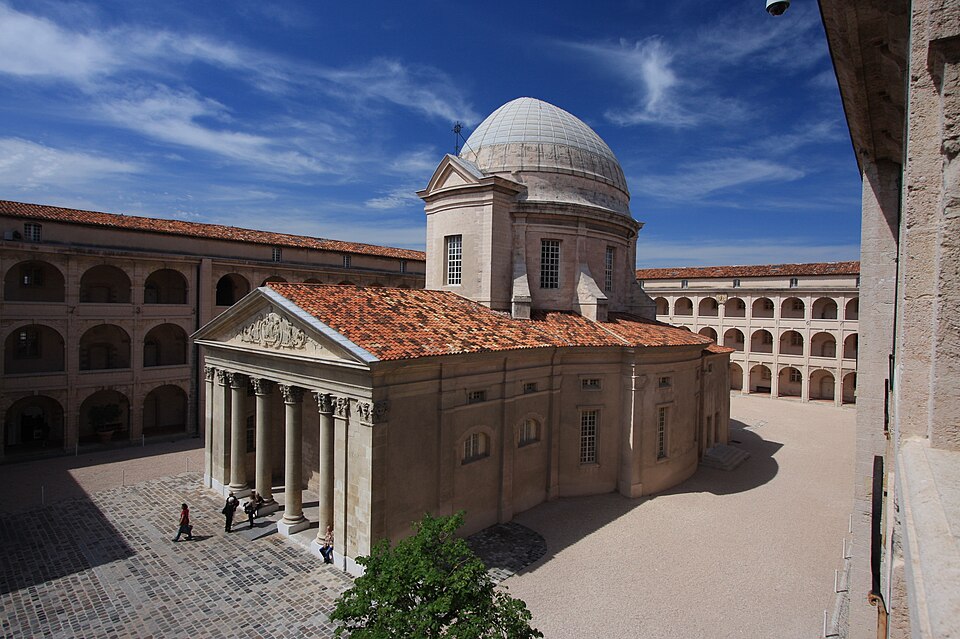
Built beginning in the 17th century to house Marseille’s poor, it is organized around an elegant arcaded courtyard and a central chapel. Today, the building is home to several cultural institutions.
Notable among them are the Museum of Mediterranean Archaeology, whose collections span several ancient civilizations, and the Museum of African, Oceanic, and Native American Arts.
La Vieille Charité is therefore worth more than just a quick visit to admire its architecture. It is also one of the most interesting places in Marseille, bringing together several collections within a single building.
Practical information: The Centre de la Vieille Charité is located at 2 rue de la Charité. It is open Tuesday through Sunday, and admission to the permanent collections of both museums is free. Temporary exhibitions change throughout the year; check the official website of the Musées de Marseille for details.
5. The Marseille History Museum: 2,600 Years of History
To truly understand Marseille, a visit to the History Museum is a must.
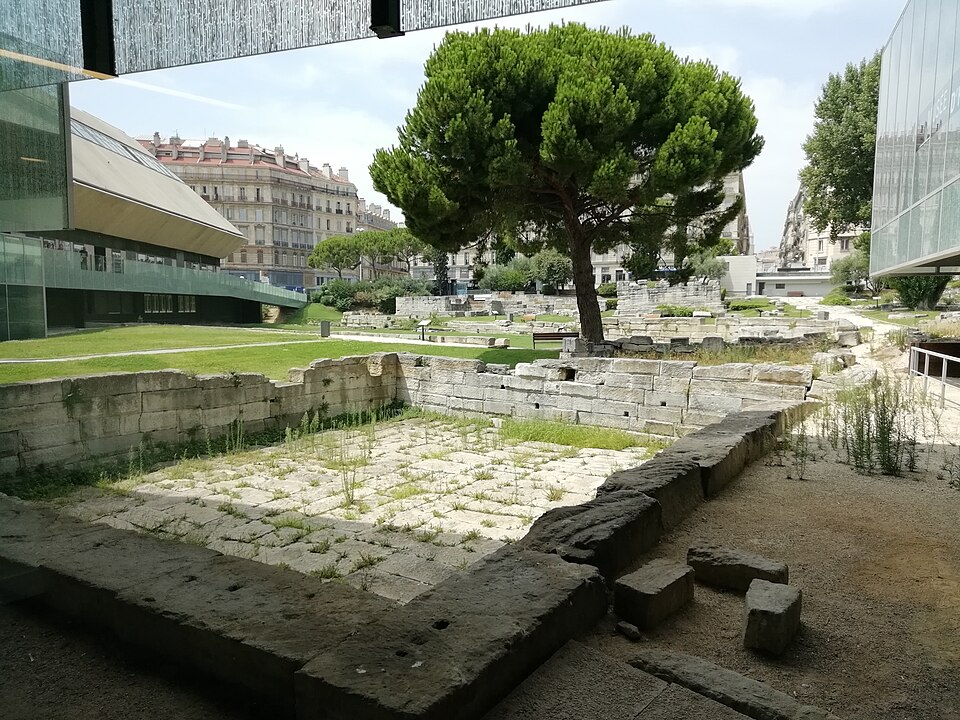
Located right next to the Old Port, it traces 26 centuries of history, from the founding of Massalia by the Greeks to the modern-day city.
The tour helps put what we see elsewhere in Marseille into a broader context: its role as a port, its trade, its urban transformations, and the various groups of people who have contributed to its development.
Outside the museum, the archaeological site of the Ancient Port extends this history into the modern city.
Practical information: The museum is located at 2 Rue Henri Barbusse. It is open Tuesday through Sunday, from 9 a.m. to 6 p.m., and admission to its permanent collections is free. Find the latest information on the official website of the Marseille History Museum.
6. Notre-Dame de la Garde: mosaics and a panoramic view of Marseille
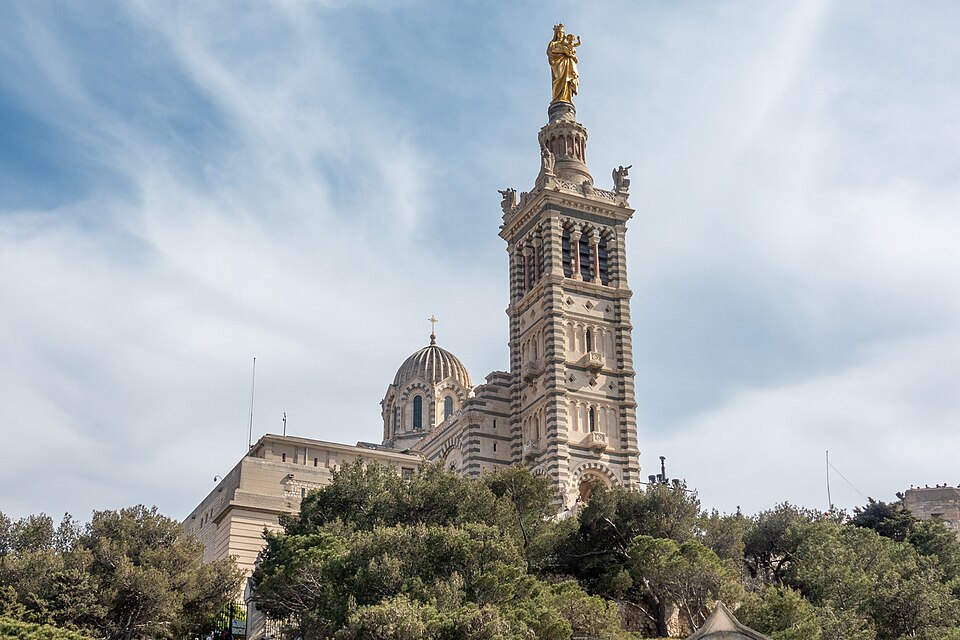
Notre-Dame de la Garde is best known for its panoramic views, but the basilica is worth exploring in its own right.
Built in the 19th century by architect Henri Espérandieu, the “Bonne Mère” stands at the highest natural point in Marseille. Inside, golden mosaics, marble, and maritime ex-votos bear witness to the historic connection between the sanctuary, sailors, and the city.
From the esplanade, the view takes in the Old Port, Frioul, the Château d’If, and the neighborhoods that stretch all the way to the hills. After exploring Marseille at sea level, this view offers a different perspective on the city’s geography.
Practical information: Plan on spending about an hour to an hour and a half there. From downtown, bus 60 goes directly to the basilica. Admission is free.The Marseille Tourist Office provides details on how to get there and information for visitors.
7. The Château d’If: The Story Continues Off the Coast
The last monument on this list takes you off the streets of Marseille.
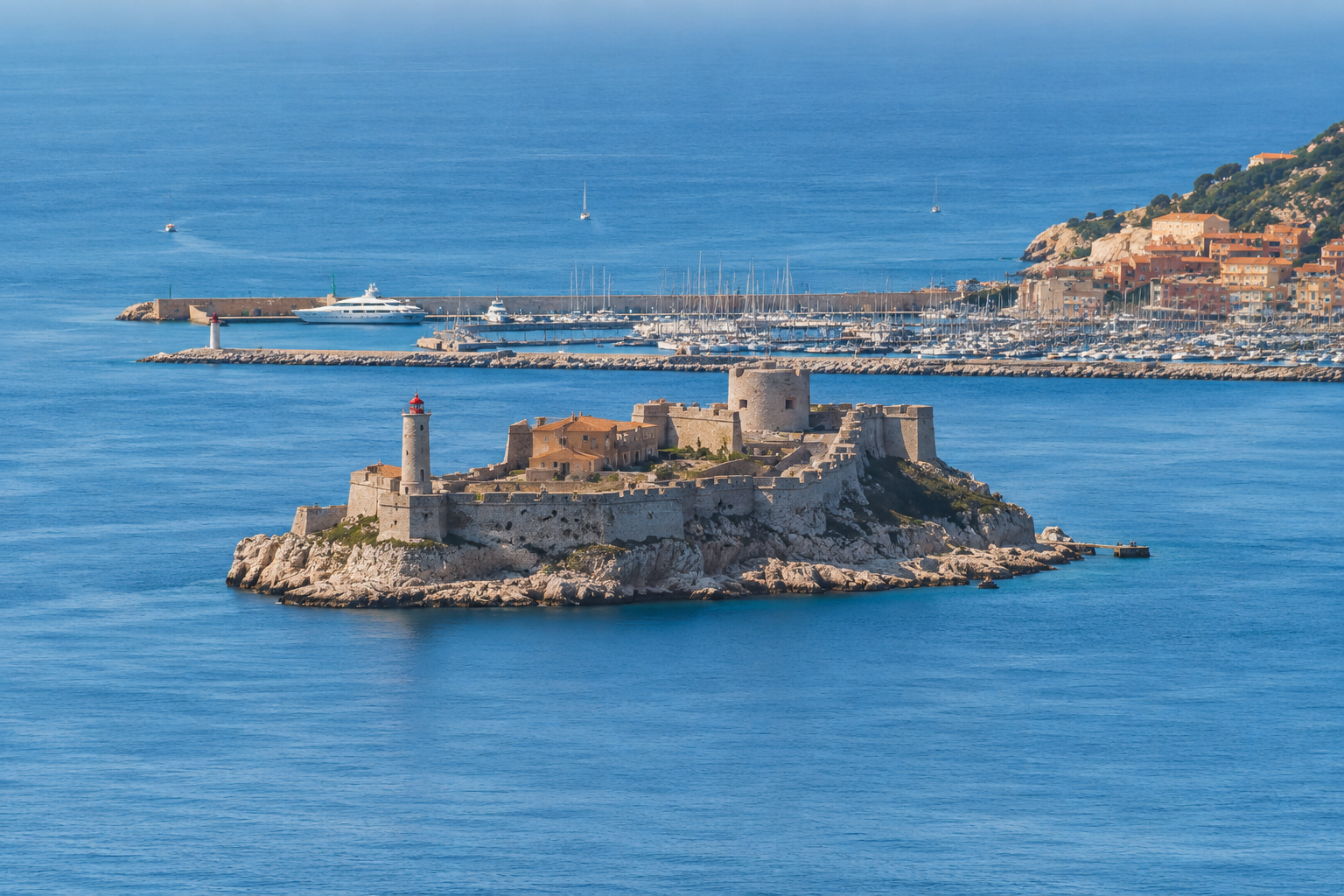
Built in the 16th century on a small island in the harbor, the Château d’If later became a state prison before entering the collective imagination thanks to Alexandre Dumas and *The Count of Monte Cristo*.
Boats depart from the Old Port, and the crossing is an integral part of the experience. Upon arrival, historic cells, fortifications, and terraces tell the story of the monument while offering a remarkable view of Marseille.
Practical information: Allow about half a day for the ferry ride and the tour. The ferry ticket and admission to the castle are sold separately. The site may close due to inclement weather and is not accessible to people with limited mobility. Check the hours and conditions on the Château d’If’s official website.
Where should you stay for a cultural weekend in Marseille?
Located on Rue Mazenod, the Hôtel du Mucem by Esteem is the perfect starting point for exploring the waterfront. The Mucem is about a two-minute walk away, while Fort Saint-Jean, the Major, and the first streets of Le Panier are also right nearby.
This arrangement allows you to spend your first day at the Mucem, Fort Saint-Jean, La Major, and La Vieille Charité, then expand your exploration the next day to include the History Museum, Notre-Dame de la Garde, or the Château d’If.
You don’t have to visit all seven places in a single weekend. In Marseille, part of the appeal lies in what connects them: a few streets in the Panier district, a footbridge over the sea, a detour through the Old Port, or simply taking the time to watch the city change between visits.
%201.png)