1. Start with the MuCEM and the gardens of Fort Saint-Jean
It’s hard to imagine a better introduction to Marseille. Between the MuCEM’s striking architecture, the Mediterranean Sea, and the ramparts of Fort Saint-Jean, the tour offers as many views of the city as there are exhibitions to explore.
After exploring the museum’s collections, take some time to cross the footbridges and stroll through the fort’s gardens. Several terraces offer views of the entrance to the Old Port, the Palais du Pharo, and the boats heading out to the islands. The outdoor areas of Fort Saint-Jean are free to visit—a great reason to return at the end of the day, when the light becomes softer.
Practical information: The MuCEM is closed on Tuesdays. Allow two to three hours to visit an exhibition and take your time enjoying the outdoor areas. Check the MuCEM’s hours and information before your visit.
2. Get lost in the streets of Le Panier
Right behind the Major Cathedral lies Le Panier, Marseille’s oldest neighborhood. Here, it’s best to forget your planned itinerary and just follow the stairways, colorful facades, and narrow alleys.
Here you’ll find small workshops, galleries, designer boutiques, and quiet spots to stop for a coffee. La Vieille Charité, with its arcaded courtyard and central chapel, is also worth a visit. The neighborhood is especially pleasant in the morning, before the tour groups arrive, or in the late afternoon.
Practical information: Le Panier is just a few minutes’ walk from the hotel. Be sure to wear comfortable shoes: the narrow streets are often cobblestone, and the neighborhood has many stairs.
3. See Marseille from Notre-Dame de la Garde
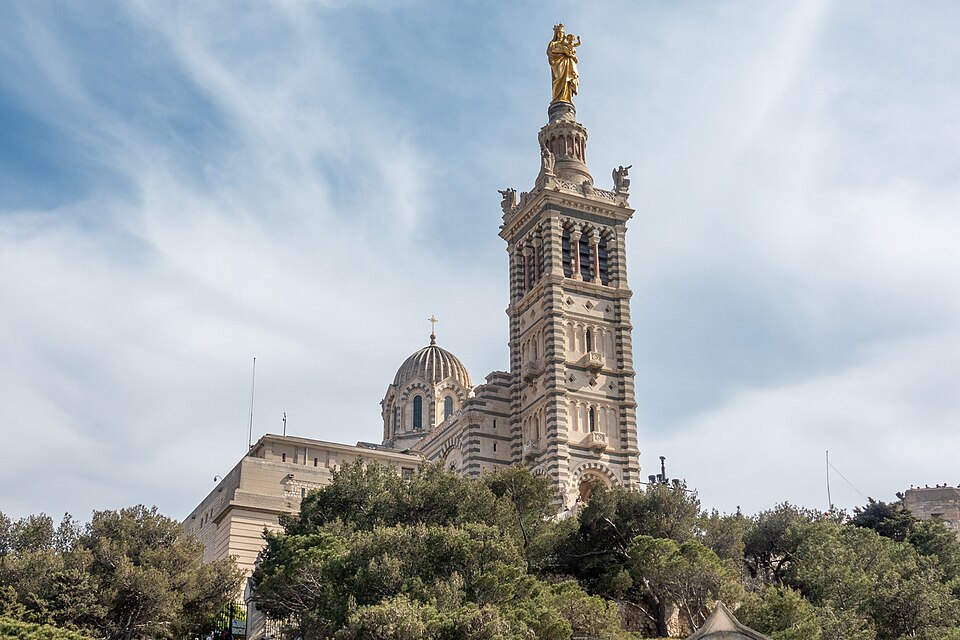
The basilica overlooks the city from a hill rising to nearly 150 meters. From its forecourt, the view takes in the rooftops of Marseille, the Frioul Islands, the Côte Bleue, and the hills that mark the beginning of the Calanques.
The climb is especially worth it for this change in scale: the city, which can feel intense as you pass through it, suddenly opens up to the sea. In the late afternoon, the facades and hills take on golden hues. It’s best to arrive before sunset so you’ll have time to visit the basilica and admire its mosaics.
Practical Information: From the Old Port, bus 60 takes you directly to Notre-Dame de la Garde. Those who are more athletic can walk up the hill, but the slope is steep.The Marseille Tourist Office provides details on the main routes.
4. Walk along the Corniche to the Vallon des Auffes
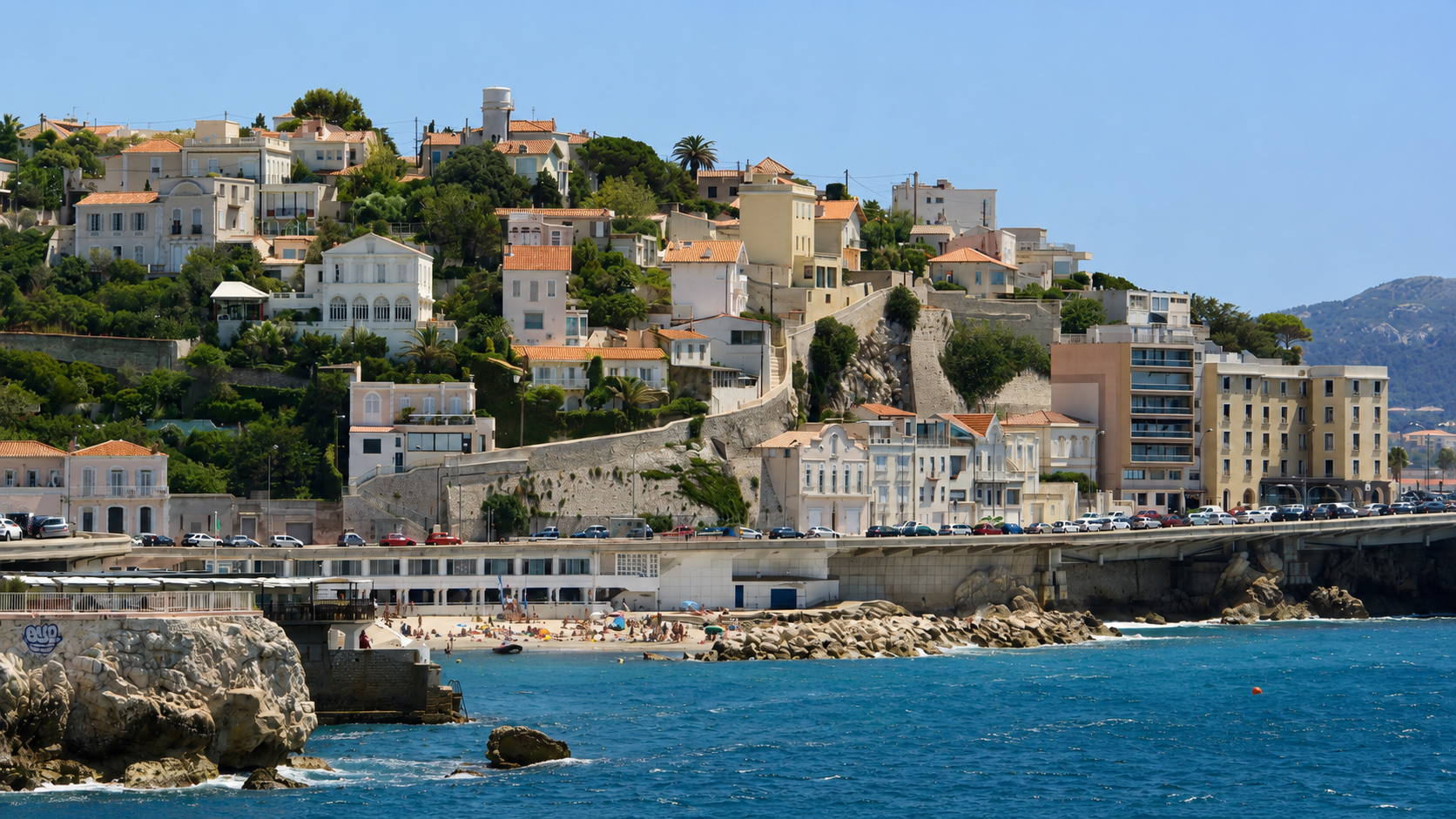
The Corniche Kennedy stretches for nearly three kilometers, offering panoramic views between downtown and the southern beaches. On one side are the villas and traditional Marseille houses; on the other, the sea stretches almost uninterrupted.
Along the way, head down to the Vallon des Auffes. This small, sheltered harbor—recognizable by its traditional boats and viaduct—retains a unique atmosphere. It’s an ideal spot to have a drink or dinner overlooking the boats, especially when the neighborhood settles down after a busy day.
In practice: Allow between 45 minutes and an hour to drive along the Corniche without stopping; it will take longer if you stop at the small ports. Bus 83 runs along much of the coastline from the Old Port. Find the recommended itinerary on the page dedicated to the Corniche Kennedy and the Vallon des Auffes.
5. Set out to sea at sunset
From the water, Marseille reveals a very different side. The facades of the Old Port recede into the distance, Fort Saint-Jean regains its defensive silhouette, and Notre-Dame de la Garde gradually comes to dominate the entire landscape.
Several companies offer late-afternoon sailboat or catamaran trips. Depending on the package you choose, the outing may include a swim, an aperitif, or a light dinner on board. The experience is particularly enjoyable in the spring and early fall, when the days are still bright and the crowds are lighter.
Practical Information: Departures usually take place at the Old Port. The schedule depends on the season and weather conditions: it’s best to book a few days in advance and bring a jacket, even in the summer. Discover the various boat activities in Marseille.
6. Treat yourself to a day trip to the Frioul Islands
Just a few kilometers from the city, the Frioul Archipelago already gives the impression of being somewhere else entirely. Its light-colored rocks, coves, and windswept trails create an almost arid landscape, surrounded by crystal-clear water.
Once you arrive on Ratonneau Island, you can walk to the former Hôpital Caroline, find a cove to go for a swim, or simply have lunch near the harbor. You can also plan a stop at the Château d’If, made famous by *The Count of Monte Cristo*.
The charm of the trip lies in its simplicity: a few belongings in a bag, a boat ticket, and a day spent mostly outdoors.
Practical Information: Shuttles depart from the Old Port year-round, weather permitting. Check the schedule and book your tickets with the Frioul and Château d’If ferry company. Be sure to bring water, sunscreen, and appropriate footwear: shaded areas are scarce.
7. Explore the Calanques, on foot or by boat
Between Marseille and Cassis, the Calanques mountain range features a mix of limestone cliffs, pine forests, and narrow coves. Sugiton, Morgiou, Sormiou, and En-Vau each have their own unique character, but all require a minimum of preparation.
For a relaxed first exploration, a boat tour offers a chance to view the landscape from the sea. Couples who prefer to walk can choose a hike suited to their fitness level and set out early, bringing plenty of water. The trails are often rocky, exposed to the sun, and more challenging than the distances might suggest.
Practical Information: Access to the mountain range is restricted in the summer due to the risk of wildfires. On certain days, the trails may be completely closed. Access to Sugiton also requires a free reservation on certain dates. Always check the access conditions for the Calanques National Park the day before your outing.
8. Experience Marseille Through Its Neighborhoods
Marseille cuisine is more than just bouillabaisse. It tells the story of the city’s ports, migration, and markets: panisses, navettes with orange blossom, pieds-paquets, rockfish, olive oil, and cuisines from across the Mediterranean basin.
A culinary tour lets you explore several neighborhoods while learning about their history. From the Old Port to Le Panier, or from the Noailles Market to the Cours Julien, the stops alternate between traditional spots and more contemporary eateries. It’s a lively way to explore Marseille without turning the day into a series of sightseeing stops.
Practical Tips: Allow about three hours and avoid eating lunch before you leave. Some tours are organized in small groups and require a reservation. The Tourist Office offers several experiences centered on Marseille’s cuisine.
9. Reserve a table overlooking the Mediterranean
In Marseille, the dining setting is almost as important as the food itself. A table in the Vieux-Port keeps you right in the heart of the city, while the Vallon des Auffes, Malmousque, and the Corniche offer a more intimate atmosphere.
For a great evening out, choose a spot based on sunset time and arrive a little early to take a walk along the waterfront. The most popular restaurants fill up quickly on weekends and during the summer.
Bouillabaisse can be a wonderful experience for two, provided you choose a restaurant that follows the traditional preparation method. Since it takes time to prepare and involves several courses, it generally needs to be ordered in advance.
Practical Tips: To dine overlooking the sea, make a reservation several days before your arrival and specify if you’d like a table on the terrace. If the mistral is blowing, a table near a picture window can be just as pleasant.
10. End the evening at the Cours Julien
The Cours Julien showcases a more vibrant and creative side of Marseille. Facades covered in street art stand side by side with record stores, bookstores, small concert venues, and wine bars.
The neighborhood is perfect for an impromptu evening out: start by checking out the murals in the surrounding streets, pick a sidewalk café, and then catch a concert or a play. The atmosphere is less formal than along the coast, but just as quintessentially Marseillais.
Practical tip: The Cours Julien is easily accessible from the Noailles metro station. To enjoy the murals and shops before dinner, arrive in the late afternoon.
Where should couples stay when visiting Marseille?
Located at 22 Rue Mazenod, the Hôtel du Mucem by Esteem lets you start your day on foot, without having to rely on public transportation right away. The MuCEM, Fort Saint-Jean, the Major Cathedral, the Panier district, and the Terrasses du Port are all nearby, while the Old Port provides access to boats heading to Frioul and the Calanques.
After a day out and about, the Comfort and Superior rooms offer a peaceful setting decorated in Mediterranean colors. The 24-hour front desk and luggage storage also make it easy to arrive late or take one last stroll before departure.
To plan your getaway, you can check out other ideas for sightseeing and activities near the hotel.
Want to explore Marseille as a couple? Choose your room at the Hôtel du Mucem by Esteem and stay just a few steps from the Old Port, the Panier, and the waterfront.
%201.png)