Esteem believes that its employees have a calling.
Esteem honors everyone’s work.
Esteem restores the human connection between its guests and visitors.
Esteem combines respect with exceptional expertise.
Esteem is a philosophy we now share together.
31
/
08
/
2026
Marseille from the Sea: Boat Trips from the Old Port
Marseille is a city shaped by the sea. Its islands are visible just a stone’s throw from the port, while to the south, the limestone cliffs gradually plunge into the Mediterranean all the way to the Calanques.
The Old Port is the natural starting point for many of the city’s most beautiful boat tours. From there, shuttle boats head to the Château d’If and the Frioul Islands, while other boats set sail for the coastline of the Calanques National Park.
1. The Château d’If: a fortress off the coast of Marseille
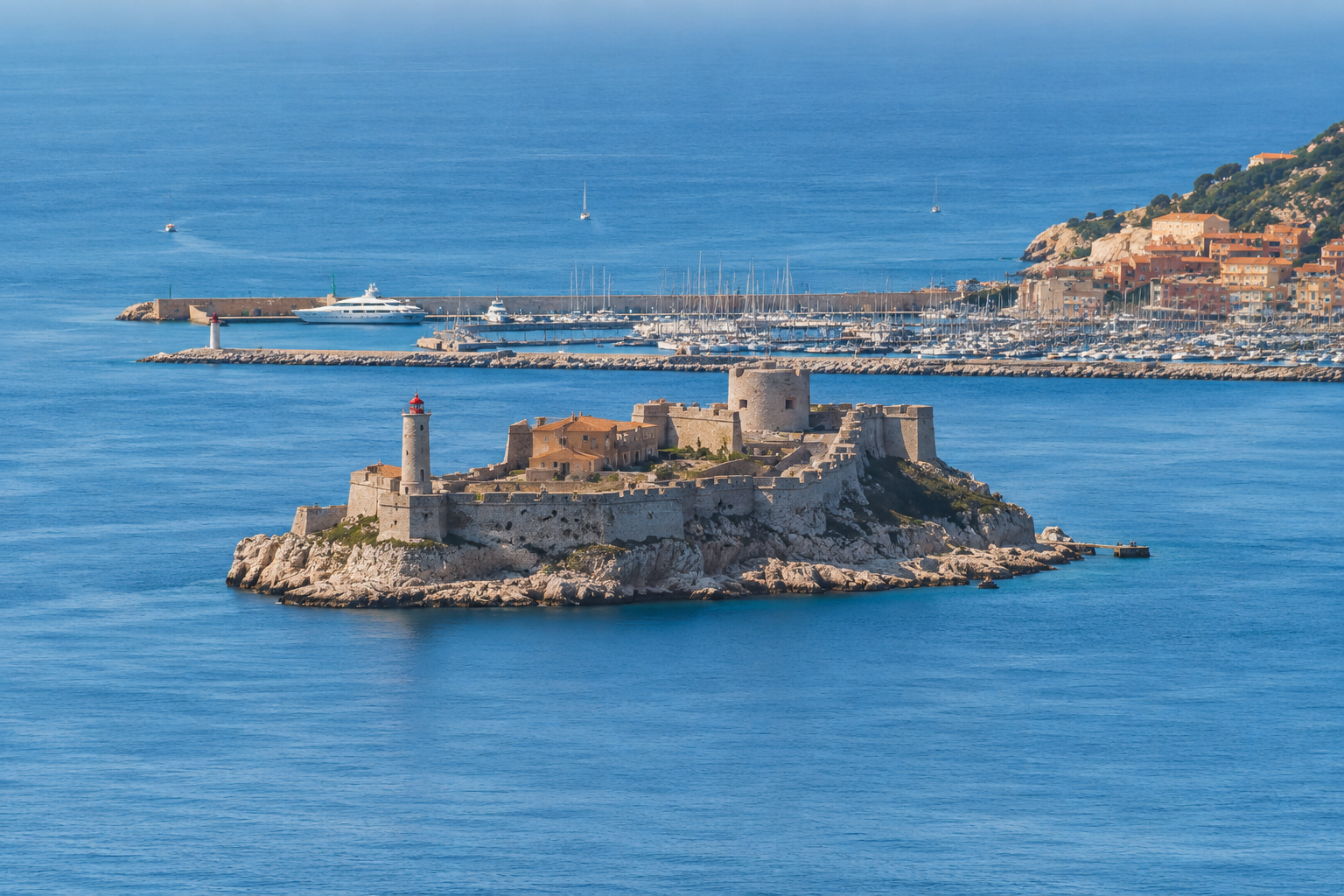
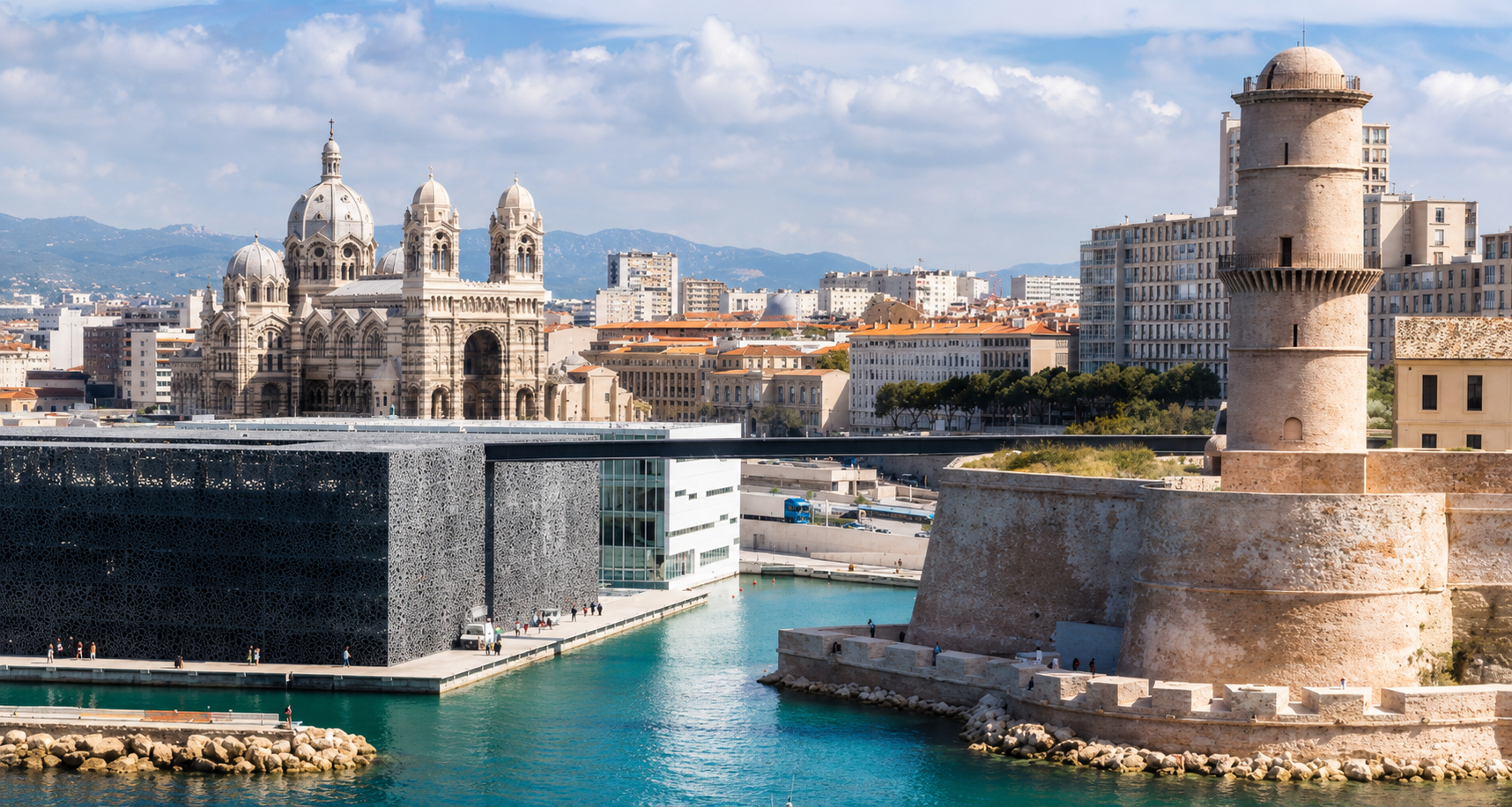
The Château d’If stands off the coast of the Old Port, perched on a rocky islet at the entrance to the harbor.
Built in the 16th century under Francis I to protect Marseille, the fortress later became a state prison. But it was literature that brought it international fame: Alexandre Dumas had Edmond Dantès imprisoned there in *The Count of Monte Cristo*.
The boat ride is already part of the tour. The boats depart from the Old Port and head directly to the island, offering a new perspective on Marseille, Fort Saint-Jean, and the coastline along the way.
Once you disembark, the tour takes you through the old cells, courtyards, and fortifications before reaching the terraces. From the ramparts, the view takes in Marseille, Frioul, and much of the harbor.
The tour is relatively short: there’s no need to set aside a whole day for it. It’s an outing that’s particularly well-suited for a morning or early afternoon.
Practical information: Allow about half a day to leisurely enjoy the crossing and the monument. The ferry ticket and admission to the Château d’If are sold separately. The grounds have many steps, and some areas may be uneven: be sure to wear sturdy shoes, and bring water and sunscreen in the summer. The monument is not accessible to people with limited mobility.
2. The Frioul Islands: coves, trails, and the Mediterranean horizon
A little further out in the harbor, Frioul quickly gives the impression that you’ve left the city behind.
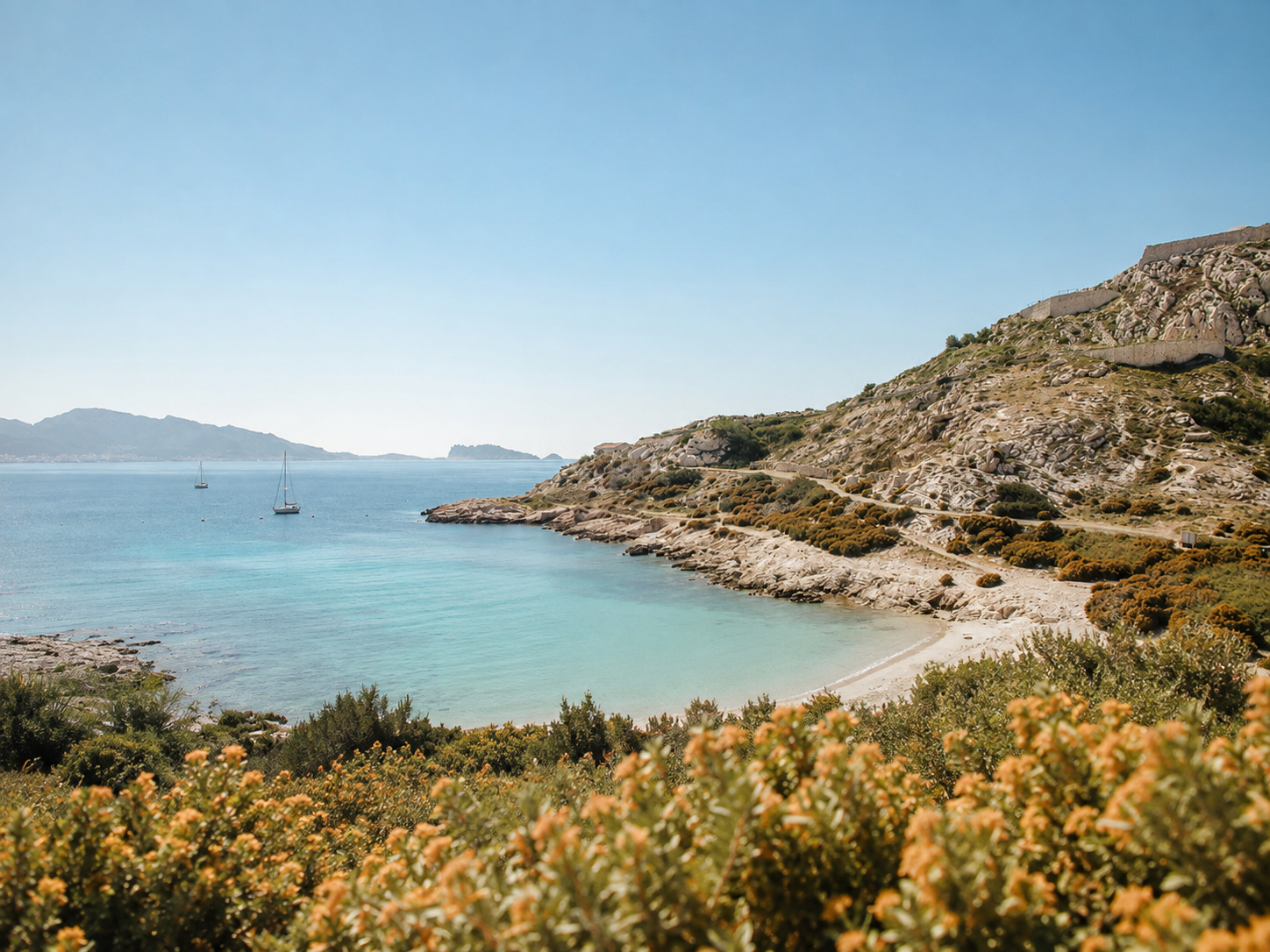
The archipelago consists mainly of the islands of Ratonneau and Pomègues, which are connected to one another. The landscape is rocky, arid, and windswept, dotted with small coves and surrounded by the ever-present Mediterranean Sea.
The boats depart from the same area of the Old Port as those heading to the Château d’If and sail to the Port du Frioul. Once there, the best way to explore the islands is on foot.
From the port, several paths lead to beaches, former military installations, and more remote areas. On Ratonneau, the former Hôpital Caroline, built in the 19th century to house travelers in quarantine, is one of the archipelago’s main historical landmarks. As you continue toward Pomègues, buildings become fewer and farther between, and the landscape opens up even more toward the sea.
In the summer, the coves naturally invite you to take a swim. But Frioul is nothing like a developed beach resort: the trails can be rocky, and shaded areas are scarce. It is precisely this unspoiled character that makes for such a charming day.
Practical advice: Plan on spending at least half a day here, and ideally more if you want to hike and swim. Bring water, sunscreen, and appropriate footwear. There are a few restaurants and shops around the harbor, but it’s best to come prepared if you plan to venture further away.
The ferry service operates year-round, subject to favorable sailing conditions. Be sure to check the time of the last ferry before setting out to explore the trails. Updated schedules and fares are available from Le bateau Frioul If.
3. The Calanques: Explore the rugged coastline from the sea
The Calanques offer a very different experience.
Here, the boat isn't just a means of getting to a destination. The journey itself is the destination.
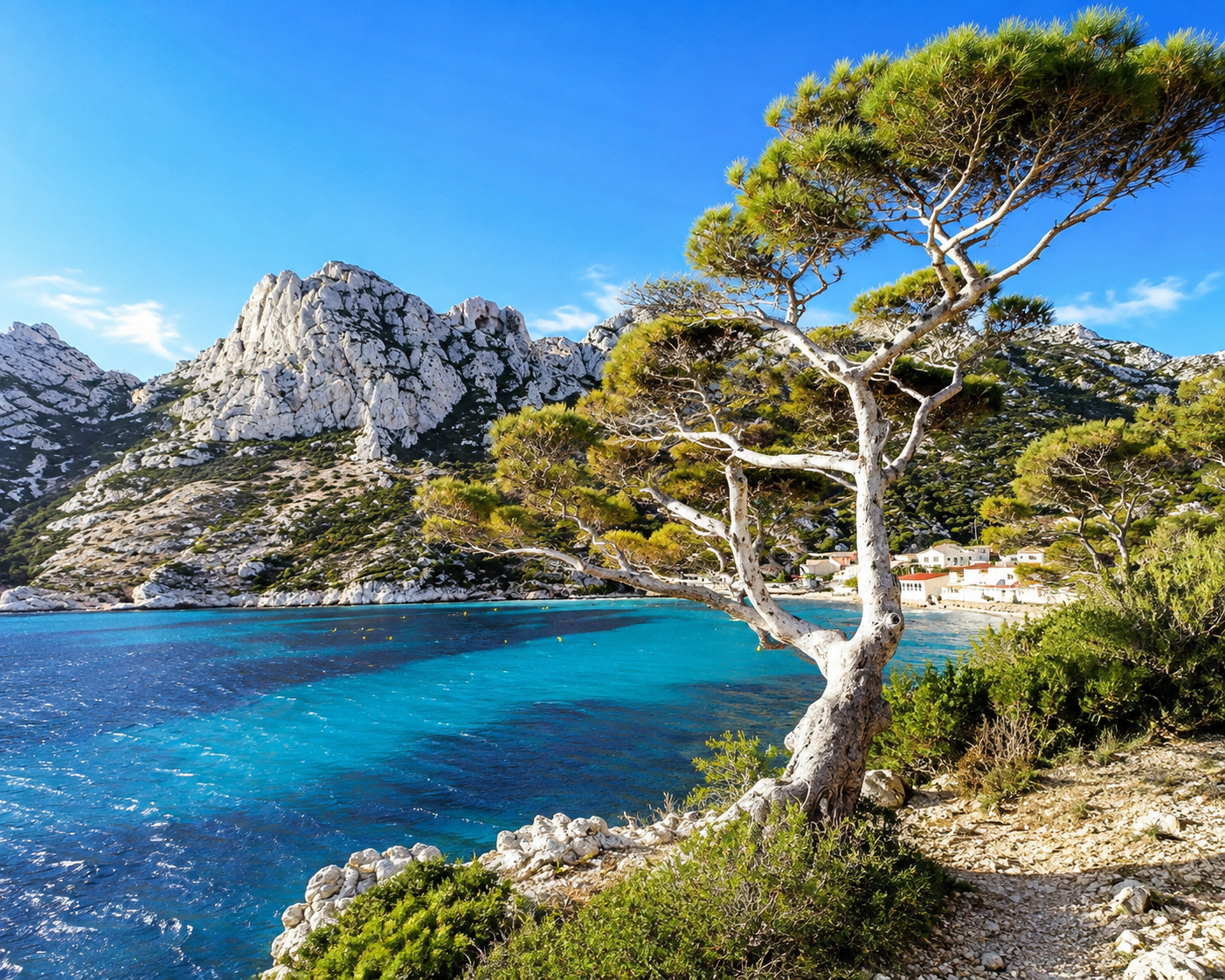
As you head south from Marseille, the urban landscape gradually gives way to small ports, rocky headlands, and the immense limestone cliffs of the Calanques National Park.
Depending on the route you choose, the excursions may pass by Les Goudes and Callelongue before continuing on to some of the massif’s most iconic calanques: Sormiou, Morgiou, Sugiton, En-Vau, Port-Pin, and Port-Miou.
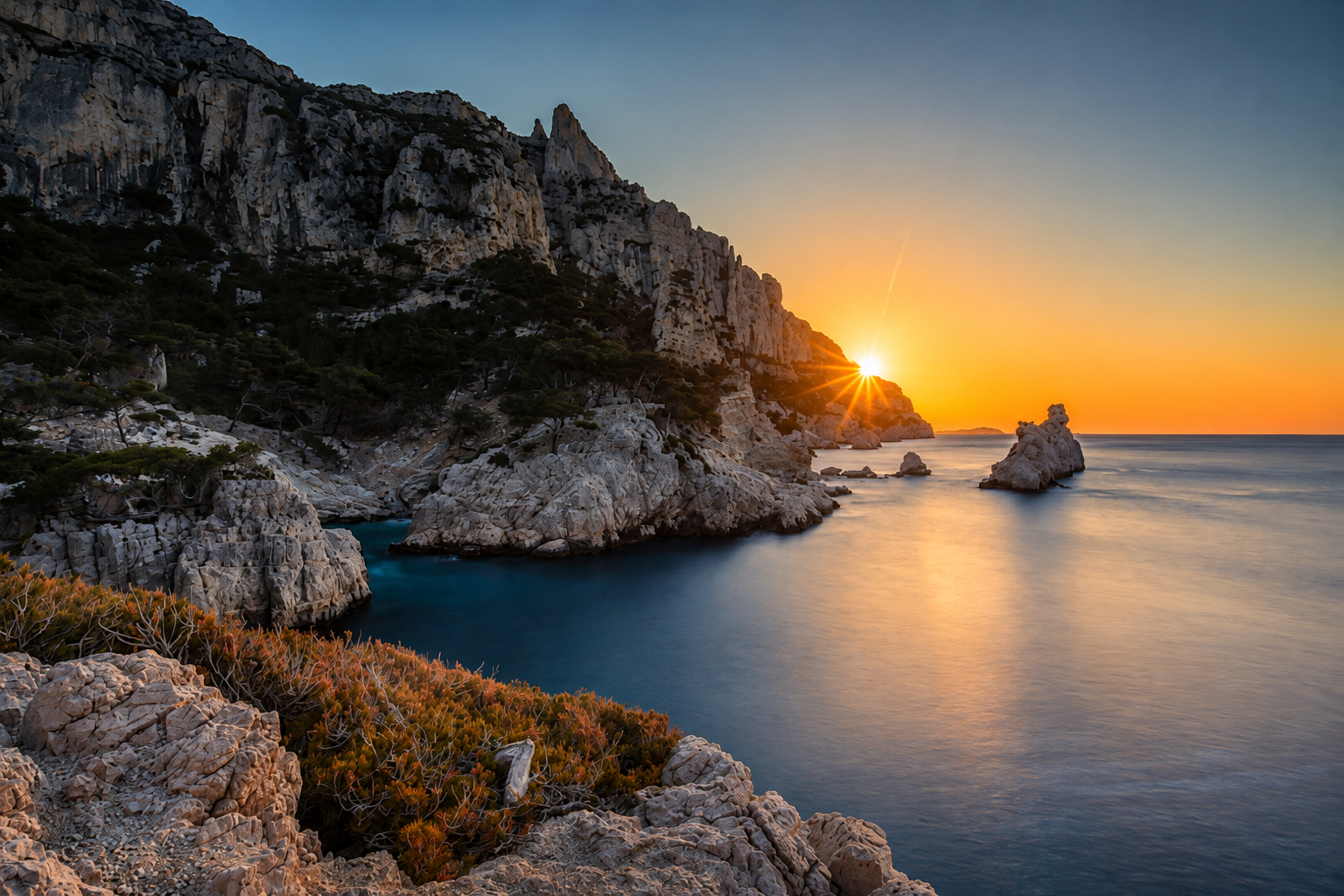
From the sea, the landscape takes on a whole new dimension. The white cliffs plunge straight into deep water, the entrances to the calanques appear between the rock faces, and Marseille seems to gradually fade away behind the boat.
However, not all excursions offer the same experience. Some tours are primarily scenic and remain on the water for the entire outing. Others, particularly those aboard smaller boats, may include a swim or time at anchor.
It’s therefore best to take a close look at the itinerary before booking, rather than choosing based solely on the duration. Standard tours generally don’t allow you to disembark in the heart of the Calanques.
The National Park also regulates commercial activities at sea to protect this particularly fragile environment. Always choose a company authorized to sail within the park’s core area.
Practical advice: Set aside half a day or a full day for this excursion so you can enjoy it without having to head straight to your next destination. Even in the summer, a light jacket can come in handy when the wind picks up out at sea. Also, be sure to bring water, sunglasses, and sunscreen.
Itineraries are subject to sailing conditions and may be adjusted in the event of adverse weather.
Château d’If, Frioul, or the Calanques: Which outing should you choose?
Choose the Château d’If if you’d like to combine a boat ride with a cultural tour. The outing is relatively short, leaving you with part of the day to explore Marseille.
Choose Frioul for a more relaxed day spent hiking, exploring coves, and swimming. Here, the appeal lies as much in the scenery as in the places you visit.
Choose the Calanques if your main goal is to explore the coastline. Of these three excursions, this one best showcases the spectacular and untamed beauty of the Marseille coastline.
If your stay lasts several days, you don’t have to choose between the islands and the Calanques. A day trip to Frioul or Château d’If, combined with a separate outing to the Calanques, offers two very different perspectives on the Mediterranean.
Staying near the waterfront in Marseille
The Hôtel du Mucem by Esteem is ideally located for exploring the Marseille coastline. The Mucem and the J4 waterfront are just a few minutes away, while the Old Port and the ferry terminals to the islands are within easy walking distance.
Because it’s so close, you can easily get to the docks in the morning, and then head back to the Mucem and Fort Saint-Jean neighborhoods after a day at sea.
Whether before or after a trip, our article “The Mucem: Between the City and the Sea” offers a different way to understand the connection between Marseille and the Mediterranean, through the museum’s architecture, its collections, and the gardens of Fort Saint-Jean.
A Few Tips Before Setting Sail
In Marseille, the weather is part of the plan. Shuttle services to the islands and excursions to the Calanques may be changed or canceled if sea conditions require it. So always check your departure time on the day of your trip.
For Frioul and the Calanques, be sure to bring water, sunscreen, and sturdy shoes. For the Château d’If, be sure to check both the boat schedules and the monument’s hours, as they operate independently.
%201.png)